
Thank you for participating in the 2026 Election. Voting is now closed.
Vice-President
Treasurer-Elect

Holly Wilcox, PhD
Johns Hopkins Bloomberg School of Public Health
Dr. Holly Wilcox is a Professor in the Department of Mental Health at the Johns Hopkins Bloomberg School of Public Health and director of the Johns Hopkins Center for Suicide Prevention. She holds joint appointments in the Department of Health Policy and Management, as well as the Johns Hopkins Schools of Medicine and Education. Holly’s research centers on advancing public health approaches to suicide prevention, encompassing policies, early intervention, and chain of care approaches. Holly is the President of the International Academy of Suicide Research (IASR), a member of the Scientific Council and Board of Directors of the American Foundation for Suicide Prevention (AFSP), a suicide prevention consultant for the World Health Organization, and an Affiliate Investigator at the Centre for Research Excellence in Suicide Prevention of the Black Dog Institute in Australia.
Dr. Wilcox has a focus on population-based research on preventing suicidal behaviors. Her work evaluates the impact of community-based universal prevention programs targeting suicidal behaviors and leverages data linkage strategies to inform effective suicide prevention. Dr. Wilcox’s research extends to diverse settings, including schools, universities, social media platforms, and emergency departments. She actively mentors students, teaches courses at the Johns Hopkins Bloomberg School of Public Health, and leads a multidisciplinary, interdepartmental suicide prevention center at Johns Hopkins. She has won the Johns Hopkins Advising, Mentoring, and Teaching Recognition Award three times.
Throughout her career, Dr. Wilcox has been a tireless advocate for a public health-oriented suicide prevention agenda, collaborating with national and international organizations such as the National Institutes of Health, World Health Organization/UNICEF, and Pan American Health Organization. She has secured over 50 million dollars in competitive research grants from various agencies and has published over 180 research articles. Dr. Wilcox has worked to adapt and implement school-based interventions in the United States and make research findings accessible to people working in various roles in the community including mental health professionals and suicide bereaved individuals.
Suicide Prevention
Suicide is the second leading cause of death in the United States in those under age 35. In 2023 alone, almost 50,000 lives were lost to suicide in the US. Suicide is a preventable problem, yet a public health approach has not been universally applied. Most people at risk for suicide are unrecognized or recognized too late, years or decades after mental health problems and addiction have already greatly disrupted their lives. Most suicidal individuals receive no treatment or inadequate treatment. Although we know what the best practices are, they are often not implemented and there is discontinuity between levels of care. A large proportion of suicide attempters die on their first attempt. Suicide is a complex, multi-determined problem that needs multifaceted solutions and interventions. The 2029 APPA meeting would focus on the state of the science in the suicide prevention domain involving policy and population-level solutions, AI and technology, improving access to affordable and effective mental health care, strengthening the chain of care for suicidal individuals, reducing access to lethal means, and expediting access to data to be used for action to prevent suicide.
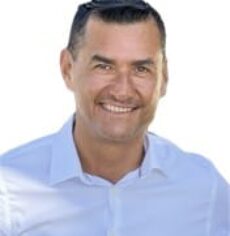
Oscar Jimenez-Solomon, PhD, MPH
New York State Psychiatric Institute and Columbia University
As a social science researcher dedicated to addressing inequities in mental health through research, social interventions, and policy, I am honored to be considered for the role of Treasurer of the American Psychopathological Association (APPA) Council. Although I joined APPA only recently (2024), I have quickly come to value the organization’s commitment to rigorous science, interdisciplinary collaboration, and advancing diversity, equity, and inclusion.
If elected, I would support APPA’s financial stability and long-term growth by drawing on my experience serving on the boards and committees of national and international organizations and expertise in the social determinants of mental health. My leadership background includes current service as a Board Member and Treasurer of the World Association of Cultural Psychiatry (and active participant in its Family and Culture SIG), the National Disability Institute (Board Member; Vice President, 2018–2020), and the American Society for Hispanic Psychiatry (Board Member and Treasurer, 2014–2019). I also bring experience organizing major scientific meetings, including serving as Local Organizing Committee Chair for the 2018 World Congress of Cultural Psychiatry in New York City and as a Program Committee Member for APPA’s 2025 and 2026 Annual Meetings.
As Treasurer, I would be committed to ensuring APPA’s fiscal health, transparency, and sustainability, while also contributing to its broader mission of scientific excellence and equity. I am also eager to continue supporting the efforts of the Diversity, Equity, Inclusion, Accessibility, and Belonging Committee and the APPA Program Committee, and to help strengthen APPA’s impact for future generations of scholars and practitioners.
Dr. Oscar Jiménez-Solomon is a mental health and social policy researcher dedicated to advancing equity by addressing the social determinants of mental health, including poverty, financial hardship, and economic opportunity. His work integrates quantitative and qualitative methods, the design of multisectoral interventions, and the meaningful inclusion of individuals with lived expertise.
Dr. Jiménez-Solomon earned a PhD in Social Policy from Columbia University School of Social Work, an MPH from the Columbia Mailman School of Public Health, and a BA in Sociology from the Pontifical Catholic University of Peru.
Since 2013, he has served as a Research Scientist at the New York State Psychiatric Institute (NYSPI), Columbia University Medical Center, and in 2024 was appointed Assistant Director of the NYS Center of Excellence for Cultural Competence. At CECC, he leads a study funded by the American Foundation for Suicide Prevention to develop and evaluate a peer-led financial empowerment intervention aimed at reducing hardship and suicide risk, and he spearheads a report by the New York State Suicide Prevention Task Force aimed at shaping policy and programmatic recommendations for disproportionately affected populations. Dr. Jiménez-Solomon also works with the NYSPI Community Mental Wellness Center, where he leads development of a community-based intervention addressing financial hardship. He is also a Research Scientist Affiliate at the Columbia Center on Poverty and Social Policy, focusing on measurement of socioeconomic stressors in mental health epidemiology and the longitudinal links between income, material hardship, and mental health.
With more than 20 years of experience, Dr. Jiménez-Solomon has collaborated on research, policy, and program development in the United States, Peru, the Dominican Republic, and Chile. His past roles include Director of Economic Development at the Alliance for Rights and Recovery, Officer of Research at Columbia’s Mailman School of Public Health, Research Associate at the Pontifical Catholic University of Peru, and International Consultant at the United Nations Population Fund (UNFPA). He has authored or co-authored numerous peer-reviewed articles, book chapters, policy reports, empowerment tools, and training manuals for mental health professionals across the Americas.
Dr. Jiménez-Solomon also has extensive leadership and service experience. He currently serves as Treasurer and Board Member (2025-present) of the World Association of Cultural Psychiatry (and its Family and Culture SIG since 2022), the Board of the National Disability Institute (Board Member, 2017-present; Vice-Chair, 2019–2020), the New York State Suicide Prevention Council, and the Diversity, Equity, Inclusion, Accessibility, and Belonging (DEIAB) and Program Committees of the American Psychopathological Association (APPA). His prior leadership includes serving as Board Member (2014–2019) and Treasurer (2016–2019) of the American Society for Hispanic Psychiatry. He has also organized and supported major scientific conferences, including chairing the Local Organizing Committee for the 2018 World Congress of Cultural Psychiatry (New York City) and serving on the Program Committee for APPA’s 2025 Annual Meeting (Boston).